Australia and Vietnam

are Comprehensive Strategic Partners, facing the same regional challenges
and sharing the same aspirations for sustainable, secure, and fair electricity services as the basis of prosperity and economic growth.
Our power sectors:
share many legacy issues on how energy is generated and transmitted;
are blessed with high renewable energy (RE) potential and some of the fastest rates of RE deployment in the region;
and are undertaking (or have recently undertaken) major structural reforms to the markets, governance arrangements and infrastructure that underpin the electricity sector to take advantage of the opportunity presented by a sustainable energy transition.

Future of
Electricity - Vietnam
(FE-V)
Future of Electricity - Vietnam (FE-V) is a science-to-policy program comprised of policy dialogues to leverage the Australian experience in the energy transition to support Vietnam in exploring practical and feasible interventions for a decarbonised, reliable and affordable power system.
Recognising 50 years of diplomatic relations between Australia and Vietnam, FE-V is an initiative of the Australian Embassy in Hanoi, bringing Australian and Vietnamese experts together to share experiences and to co-develop knowledge products of prioritised topics relating to six main dimensions of the power sector (generation, fuels, consumption, grid, market and planning) with support of the Central Economic Commission of the Communist Party of Vietnam (CEC) and key partners from the electricity sector.
Phase 1 & 2
Strategic partner
The Australian Embassy
in Vietnam

Phase 3
Strategic partner
The Australian Embassy
in Vietnam
Phase 1 and Phase 2 of FE-V, delivered by the Australia - Mekong Partnership for Environmental Resources & Energy Systems (AMPERES), Australia’s Partnerships for Infrastructure (P4I) comprising Ernst & Young and The Asia Foundation, together with the Australian National University (ANU), and the Commonwealth Scientific Industrial Research Organisation (CSIRO), built a robust technical and policy foundation that paved the way for subsequent advancements in the sector.
Technical partners




Electricity Authority of Viet Nam




Phase 3 marks a transition in implementing partners, delivered by Aus4Growth (A4G) in collaboration with the Boston Consulting Group (BCG), the Australian Energy Regulator (AER), and the Commonwealth Scientific Industrial Research Organisation (CSIRO). Building on the legacy of the previous phases, this stage focused on developing the State of Viet Nam’s Electricity Sector 2024–2025 Report.


Technical partners
Vietnam’s energy system has been…
The backbone of the nation’s development trajectory

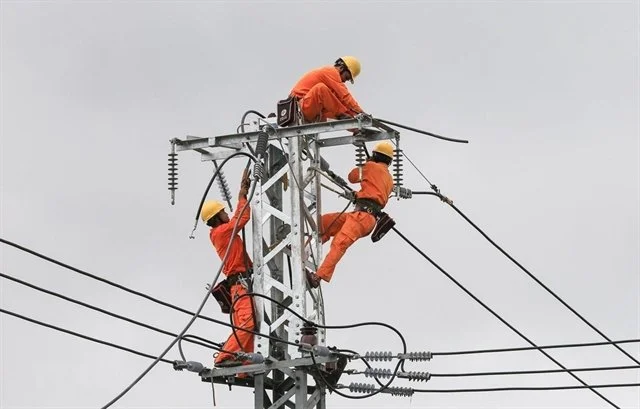
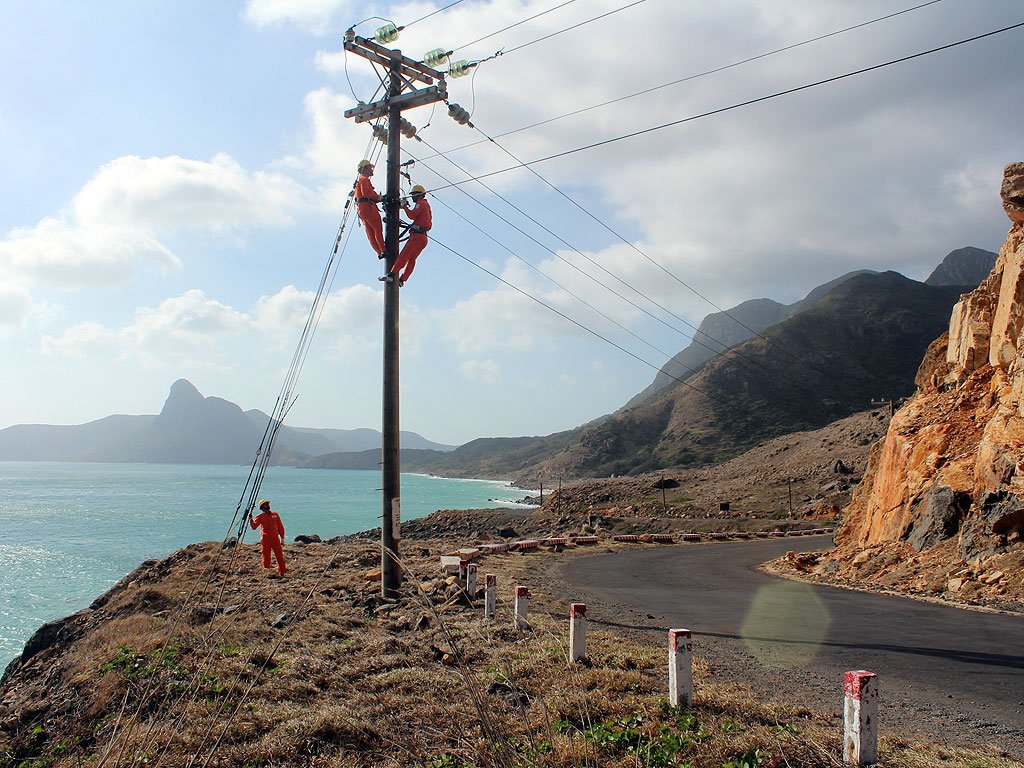
An essential ingredient for social wellbeing and prosperity
Photo: VNA
Photo: Tú Uyên/thanhnien.vn

A critical input for Vietnam’s rapidly industrialising economy
Photo: baochinhphu.vn
Increasingly, it is also a driver of…
adverse environmental impacts
due to the reliance on fossil fuels.
Politburo’s Resolution 55-NQ/TW on the Orientation of Viet Nam’s National Energy Development Strategy to 2030 and Outlook to 2045 (Res. 55) establishes an orientation for the power sector framed by the dilemma of energy security, electricity affordability and climate and environmental protection objectives.
Vietnam, recognising its high levels of vulnerability to climate change, has elevated the importance of climate response through its commitments in the international arena.
Meeting these climate commitments and maintaining momentum in the deployment of RE will require a transformation in how Vietnam’s energy sector sets priorities and delivers development in the energy sector.
Drawing on Australia’s Finkel Review, FE-V explores practical ways in which Vietnam’s energy dilemma can be expanded to the trilemma of security, affordability, and sustainability.
Establishing a clear environmental objective for the development of the energy sector will provide a formal basis to embed the Government’s net zero commitments into the dynamic ecosystem of policy, regulatory and planning instruments.
In phase I, FE-V takes a system approach to explore decarbonised future for 05 aspects of the Vietnamese power system
In phase II, under existing themes, FE-V continues to explore practical solutions to support PDP8 implementation with a comprehensive approach by adding 03 research topics
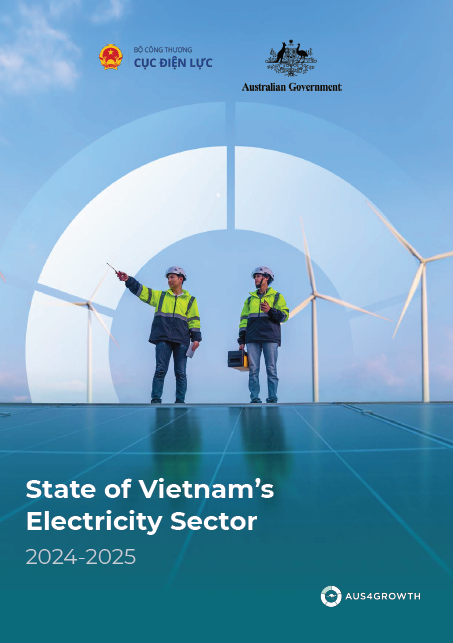
In Phase III, FE-V consolidates insights from previous research and recent sector developments through the State of Vietnam’s Electricity Sector 2024-2025 report.
The report provides a structured assessment of 05 key developments in the power sector, tracking progress toward Vietnam’s energy transition and PDP8 implementation while highlighting emerging opportunities and challenges.
-
Explores the potential for transforming the generation mix in Vietnam in line with the country’s net zero commitments and looking to exploit domestic low-carbon energy resources for national energy security and economic growth.
-
Explores the potential for hydrogen and natural gas to support an energy transition as dispatchable, firming capacity for Variable Renewable Energy (RE).
-
Explores the existing and growing issues facing transmission and distribution infrastructure (e.g., grid congestion, curtailment, the role of the private sector, changing geographies of power flow) as well as introducing new ideas and possibilities for distributed network design (such as virtual power plants, microgrids, stand-alone power systems).
-
Explores the potential to reduce Vietnam’s national GHG emissions through electrification of loads, energy efficiency, deployment of distributed energy resources (DERs, for example roof-top-solar) and other demand side management interventions. It will also consider the implications of a renewable energy transition on the affordability and sustainability of electricity tariffs.
-
Explores the progress and evolution of reforms of the Vietnamese electricity market towards a competitive retail market. It includes mechanisms and options to accelerate the development of competitive electricity markets issues of regulation, tariff price setting, electricity affordability, power purchase agreements, competitive markets for electricity service assets and to expand beyond energy-only markets to include the markets for other services (e.g., ancillary or capacity services).
-
Critically review the current power development planning process in Vietnam and identify whether it is fit-for-purpose for the new, but growing, energy transition issues in Vietnam. The team will then identify opportunities for reforming the process that adapt elements of the integrated systems planning (ISP) process to suit Vietnam’s context – in particular spatial and economic planning approaches such as Renewable Energy Zones (REZs).
-
Explores the growing damage and performance risks to the electricity system from global climate change.
-
Ensuring that population from across different socio-economic groups and geographic areas have access to affordable and reliable electricity, and to job and business opportunities in the energy transition.
-
Assesses the evolution of Vietnam’s electricity generation mix and the scale of capacity expansion required to meet the targets of the revised PDP8. It highlights the growing role of renewable energy and examines potential pathways to accelerate investment and deployment to support the country’s energy transition and long-term energy security.
-
Assesses the development of Vietnam’s competitive electricity market, including market structure and governance, the level of competition, and electricity pricing mechanisms. While the legal and regulatory foundations of the Vietnam Wholesale Electricity Market (VWEM) have been established, implementation remains partial with limited wholesale buyer participation. The report also highlights the growing role of private investors in generation, alongside EVN’s continued dominance in transmission, distribution, and wholesale purchasing, and examines how current pricing structures influence market signals and sector development.
-
Assesses the progress of Vietnam’s grid infrastructure expansion and reliability as the power system grows and integrates higher shares of renewable energy. The report reviews the scale of planned transmission expansion under the revised PDP8, ongoing digital upgrades across the grid, and emerging gaps in distribution planning and adoption of advanced technologies such as smart metering and wide-area monitoring systems. It also highlights the significant improvement in grid reliability over the past decade, reflected in sharp reductions in both outage frequency and duration for electricity consumers.
-
Examines recent trends in electricity demand and consumption patterns in Vietnam, including overall demand growth, system flexibility, energy efficiency, tariff regulation, and consumer commitment to sustainability. Electricity demand continues to grow steadily in line with economic development, while rural electrification has reached near-universal levels and electricity’s share in the final energy mix is gradually increasing. The report also highlights Vietnam’s stable load profile, improvements in energy productivity, and opportunities for further gains through structural economic shifts. In addition, it reviews the current retail tariff structure and recent price adjustments, as well as the growing willingness of industry and communities to engage in energy transition efforts.
-
Assesses the readiness of Vietnam’s energy supply chain to support the rapid expansion of the power sector. The report examines workforce capacity and the availability of critical equipment needed to deliver new generation and grid projects. While Vietnam has demonstrated strong capability in deploying renewable energy technologies such as solar and onshore wind, significant workforce gaps may emerge in the coming years as the sector expands. In addition, the timely procurement of key equipment - particularly for large-scale and emerging technologies such as offshore wind - will be essential to meet the ambitious targets set under the revised PDP8.
Knowledge products
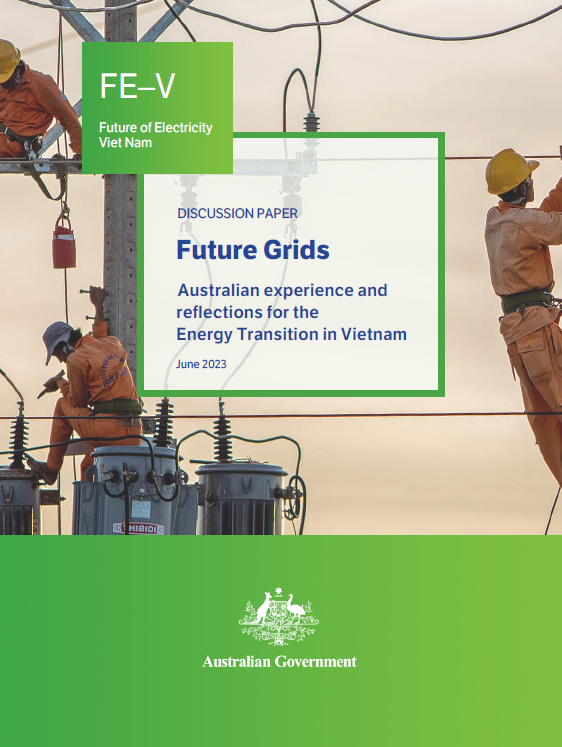
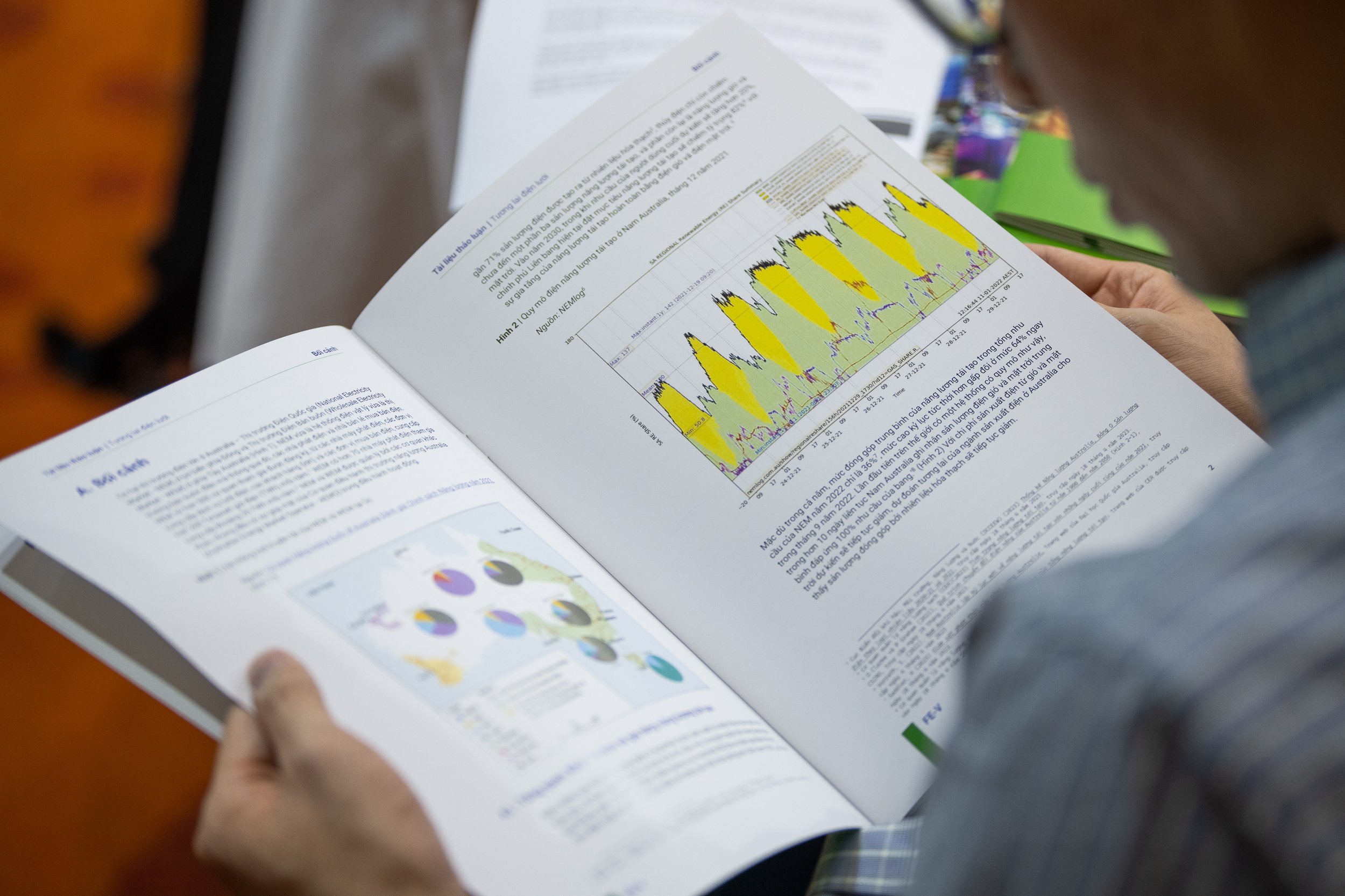
Discussion Papers
FE-V identified more than 30 strategic energy transition issues facing Vietnam’s power sector. The team then reviewed and documented the Australian experience managing these issues to distil a set of learnings and recommendations for Vietnam.
Future Generation
Future Fuels


Technical brief No. 1 - 2023

Technical brief No. 3 - 2026


Future Demand
Future Grids
Future Markets

Technical brief
Drawing on the lessons documented in the Discussion Papers and Collaborative Research Reports, the Technical briefs provide concrete recommendations to Vietnamese stakeholders to reform the national energy orientation in line with the challenges and opportunities presented by energy transition.


Collaborative Research Reports
During Phase 2 (2023–2024), FE-V focused on researching critical topics that support the practical implementation of the recently approved 8th National Power Development Plan (PDP8). A detailed review of the PDP8 targets and existing power sector situation identified 6 critical challenges for the energy transition for which potential solutions are required. These were organised by thematic area and the FE-V team developed Collaborative Research Reports (CRRs) for these critical topics. Besides the 6 main themes, there are 2 cross-cutting themes, which are Resilience, and Gender Equality, Disability, and Social inclusion (GEDSI).
Generation
Fuels
Market
Planning
Technical brief No. 2 - 2024
Demand
Grids
GEDSI
Resilience

Activities & timeline
FE-V Phase III Kick-off
April 2025


The Second CRR Mission

FE-V Phase I
November 2022 - August 2023
The start of FE-V
November 2022
The first FE-V technical meeting
March 2023
Conducted in Hanoi, the first FE-V technical meeting brought together ideas and initial input for the five energy themes.
Energy Transition Policy Dialogue
June 5, 2023
This high-level Policy Dialogue was a common place for leading Australian and Vietnamese policy-makers, officials and researchers to exchange each country's knowledge, insights and experience in the energy transition.
Technical Deep-dive Roundtable
June 6, 2023
Technical group meetings were conducted in Hanoi to discuss on the five energy themes.
FE-V Phase II
November 2023 - August 2024
The third FE-V technical meeting
Phase II Kick-off
November 2, 2023
FE-V Team and key Vietnamese stakeholders on energy transition met to discuss the six energy themes and future pathways for FE-V Phase II.
The First CRR Mission
January 2024
The first technical meeting between theme leaders and their Vietnamese counterparts to conduct the six peer-reviewed Collaborative Research Reports (CRRs).
Energy Transition Study Tour
April - May 2024
The Study Tour paves the way for peer-to-peer lesson sharing between Australia and Vietnam on power system flexibility.
Vietnam State of Energy Transition (VSET)
September 2024
A high-level technical symposium on Energy Transition. The symposium could become an annual event to take stock of progress made in implementing Vietnam’s energy transition commitments with a technical co-chair from the Australian Government. The Conference will provide an opportunity for government, private sector and academia to present findings and insight from their energy transition activities in Vietnam and to discuss strategies to accelerate energy implementation and effectively deliver PDP 8 implementation.
aims to provide information and Australian lesson learnt to the Economic Commission of the Central Committee of the Vietnamese Communist Party (CEC) and seeks to support high-level reform in the orientation of national energy development towards reliable, affordable decarbonisation.
Summary Report for Energy Transition Policy Dialogue

aims to broaden and deepen peer-to-peer technical exchange among key government line agencies and research institutions, under the five thematic dimensions to help chart a clear, ambitious and practical energy transition pathway that supports Vietnamese government agencies implement the 8th National Power Development Plan (PDP8).
State of Viet Nam’s Electricity Sector 2024-2025 Conference
November 2025
The second FE-V technical meeting
May 2023
Developed under the Future of Electricity – Viet Nam (FE-V) initiative supported by the Australia-Viet Nam partnership, the State of Viet Nam’s Electricity Sector 2024 - 2025 report aims to support informed dialogue among policymakers, industry stakeholders, and development partners on the future development of Viet Nam’s power system.
The State of Viet Nam’s Electricity Sector 2024–2025 Conference was held in Hanoi on 26 November 2025 to launch the report. The conference brought together representatives from the Government of Viet Nam, the Australian Government, industry participants, and international experts to discuss key insights from the report and exchange perspectives on electricity market reform, sector development priorities, and international experience.


The second FE-V technical meeting was a place to discuss and update the research progress on the agreed energy themes.
April 2024
The second face-to-face discussion to conduct peer review and updates on the six CRRs.
FE-V Phase III
aims to consolidate insights from previous research and recent sector developments through the State of Vietnam’s Electricity Sector 2024–2025 report, providing a structured assessment of key policy, market, and infrastructure developments while tracking progress toward Vietnam’s energy transition and PDP8 implementation and identifying emerging opportunities and challenges in the power sector.
The State of Viet Nam’s Electricity Sector 2024 –2025 Report
Digital newsletter
FE-V reviews English and Vietnamese language news articles about energy issues and energy transition in Vietnam.
Contact us to receive the digest by email. Please kindly note that the newsletter should be in English.
Photos: VNA/VNS, thanhnien.vn, Pexels/Pixabay, moit.gov.vn
-
![]()
Vol. 1 - February 2025
-
![]()
January 2025
-
![]()
Vol. 2 - December 2024
-
![]()
Vol. 1 - December 2024
-
![]()
Vol. 2 - November 2024
-
![]()
Vol. 1 - November 2024
-
![]()
October 2024
-
![]()
September 2024
-
![]()
Vol. 2 - August 2024
-
![]()
Vol. 1 - August 2024
-
![]()
Vol. 3 - June 2024
-
![]()
Vol. 2 - June 2024
-
![]()
Vol. 1 - June 2024
-
![]()
Vol. 3 - May 2024
-
![]()
Vol. 1 - May 2024
-
![]()
Vol. 4 - April 2024
-
![]()
Vol. 3 - April 2024
-
![]()
Vol. 2 - April 2024
-
![]()
Vol. 1 - April 2024
-
![]()
Vol. 5 - March 2024
-
![]()
Vol. 4 - March 2024
-
![]()
Vol. 3 - March 2024
-
![]()
Vol. 2 - March 2024
-
![]()
Vol. 1 - March 2024
-
![]()
Vol. 2 - February 2024
-
![]()
Vol. 1 - February 2024
-
![]()
Vol. 4 - January 2024
-
![]()
Vol. 3 - January 2024
-
![]()
Vol. 2 - January 2024
-
![]()
Vol. 1 - January 2024
-
![]()
Vol. 4 - December 2023
-
![]()
Vol. 3 - December 2023
-
![]()
Vol. 2 - December 2023
-
![]()
Vol. 1 - December 2023
-
![]()
Vol. 4 - November 2023
Click here
-
![]()
Vol. 3 - November 2023
-
![]()
Vol. 2 - November 2023
-
![]()
Vol. 1 - November 2023
-
![]()
Vol. 4 - October 2023
-
![]()
Vol. 3 - October 2023
-
![]()
Vol. 2 - October 2023
-
![]()
Vol. 1 - October 2023
-
![]()
Vol. 4 - September 2023
-
![]()
Vol. 3 - September 2023
-
![]()
Vol. 2 - September 2023
-
![]()
Vol. 1 - September 2023